All Articles about Power Trading
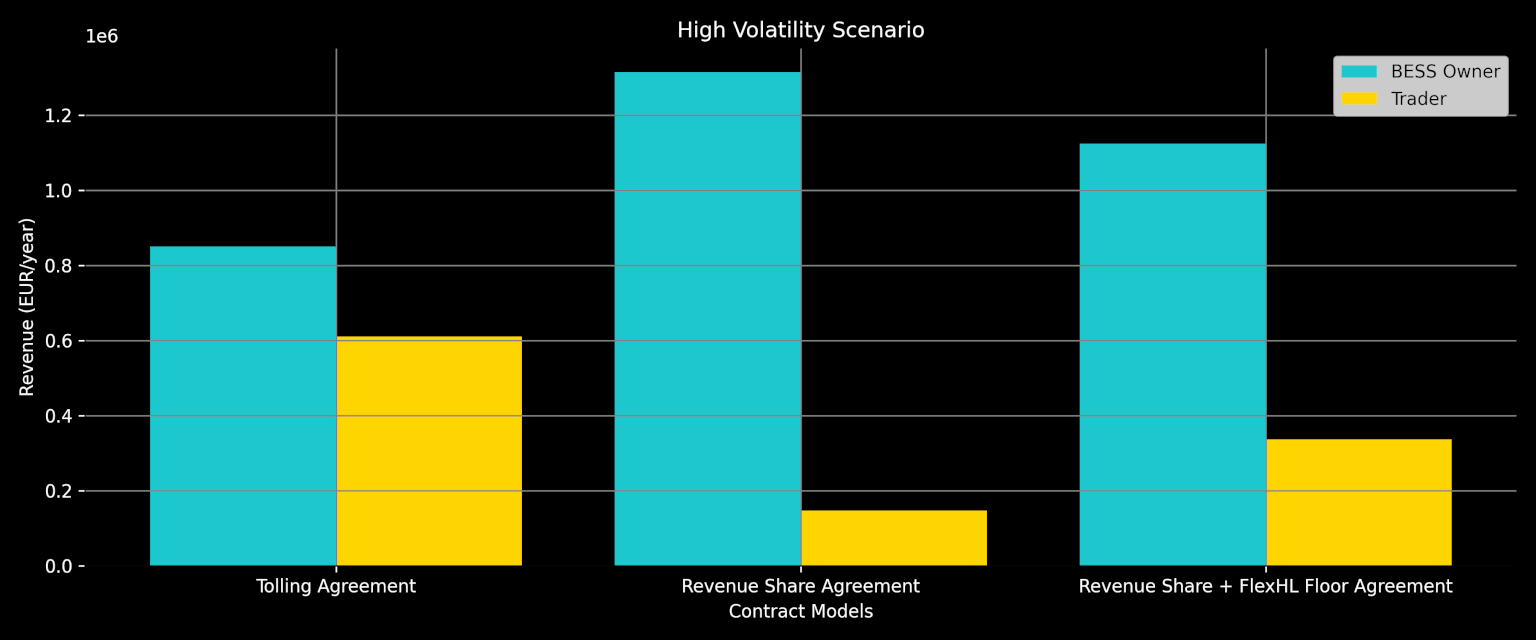
This blog post is the third in a series of articles about hedging price volatility using standard shapes such as wind and PV, as well as more novel and somewhat non-standard ones, such as the FlexHL (Battery). While the first two articles were explainers for consumers, this one is for suppliers who are looking to sell their flexibility, i.e. BESS owners.
In this subsequent blog, we extend our discussion from part I and look at how to use Flex HL (battery) shapes to hedge against price volatility.
The FlexIndex measures on a daily basis the revenues that operators of flexible assets can achieve in Germany’s short-term spot market. The index is based on a reference battery with a storage capacity of one megawatt-hour and a power of one megawatt.
In recent years, if you’re involved in the power sector, you’ve likely come across discussions about Power Purchase Agreements (PPAs). Some consider them a cure-all for advancing the energy transition, and we, too, recognize their crucial role. However, it’s essential to grasp that a PPA is essentially a contract for buying or selling power, without specifying the type.
Over the last year we became increasingly involved with the “science” of modelling past and future revenues of battery energy storage systems (BESS) and now decided to shed some light on this practice. We believe that customers are being sold a lot of voodoo for science and that the incentives in this industry are not at all well aligned.
Next-generation energy provider trawa and Hamburg-based electricity trader FlexPower have entered into a long-term partnership. This collaboration allows businesses of all sizes to source renewable energy easily and cost-effectively. Utilizing Artificial Intelligence (AI), trawa develops an optimized power procurement strategy based on historical consumption and current market data, aiming to reduce emissions and costs. As a market partner, FlexPower provides the necessary market access through its own electricity trading and a platform for Power Purchase Agreements (PPA) with renewable energy facilities to implement the optimized power procurement.
In recent years, if you’re involved in the power sector, you’ve likely come across discussions about Power Purchase Agreements (PPAs). Some consider them a cure-all for advancing the energy transition, and we, too, recognize their crucial role. However, it’s essential to grasp that a PPA is essentially a contract for buying or selling power, without specifying the type.
The question of proactive balancing group management to support the electricity system has been a hotly debated topic in German electricity trading for years. Should balancing responsible parties – as in many other European countries – also be allowed to support the system in Germany through deliberate imbalances in their portfolios or not? FlexPower discusses the results of a new study on this topic with the author, Prof. Dr. Lion Hirth from NEON Neue Energieökonomik.
We are often asked how the financial optimization (or: arbitrage) of a battery across the different market places of the spot market works. We show this x-market optimization here by way of example focusing on the day-ahead spot market (hourly auction at 12 noon), intraday quarter-hourly auction (at 3 p.m.) and the so-called intraday continuous market (quarter-hourly products up to five minutes before delivery).
17 German power traders for renewable energies, who place well over 45 gigawatts of solar and wind power on the power exchanges every day, fear negative effects on the market integration of renewable energies due to the current legislative proposal for the new German Energy Industry Act.